.png&w=384&q=75)
Switzerland Phone Number: How to Get and Use It Right

A Swiss phone number uses +41 followed by 9 digits, and mobile prefixes commonly include 075, 076, 077, 078, and 079. When the country code is used internationally, the leading 0 is dropped.
A verification form can still reject a perfectly valid Switzerland phone number if the number type is wrong, the trunk prefix remains in place, or the platform doesn't accept that range. The practical rule is simple: identify whether the number is a mobile, landline, toll-free, or business line before requesting a code.
What a Switzerland Phone Number Looks Like in 2026
A standard Swiss mobile number appears domestically as 079 123 45 67 and internationally as +41 79 123 45 67. The domestic form includes the trunk prefix 0. The international form replaces it with +41, so entering +41 079... creates an invalid structure.
Switzerland uses a closed dialing plan. The country code is +41, while the national significant number can range from 3 to 13 digits, with the majority of fixed, mobile, and value-added numbers using 9 digits, according to the official Swiss numbering plan. A mobile prefix identifies the number range, not a city. A mobile user in Geneva and one in Zurich can use the same 07x prefix family.
For a broader explanation of the country code and international dialing convention, the Switzerland calling code info is a useful supplementary reference.
| Format | Example | When to use |
|---|---|---|
| Domestic mobile | 079 123 45 67 | Calling within Switzerland |
| International spaced | +41 79 123 45 67 | Human-readable international contact |
| International compact | +41791234567 | Forms that require a continuous number |
| Country code only | +41 | Country selector, not a complete number |
Short codes, premium-rate services, and special-service ranges follow different structures. They aren't interchangeable with an ordinary mobile line and shouldn't be assumed to support OTP messages. Once the format is clear, the important choice is the number category.
Mobile, Landline, Toll-Free or Business Line
For verification, a genuine Swiss mobile number is the default choice. Mobile ranges commonly sit in 075, 076, 077, 078, and 079, while the Swiss numbering plan separately identifies fixed-network, toll-free, shared-cost, premium-rate, and special-service ranges. That distinction matters because a number can be valid for calling yet unsuitable for receiving an SMS code.
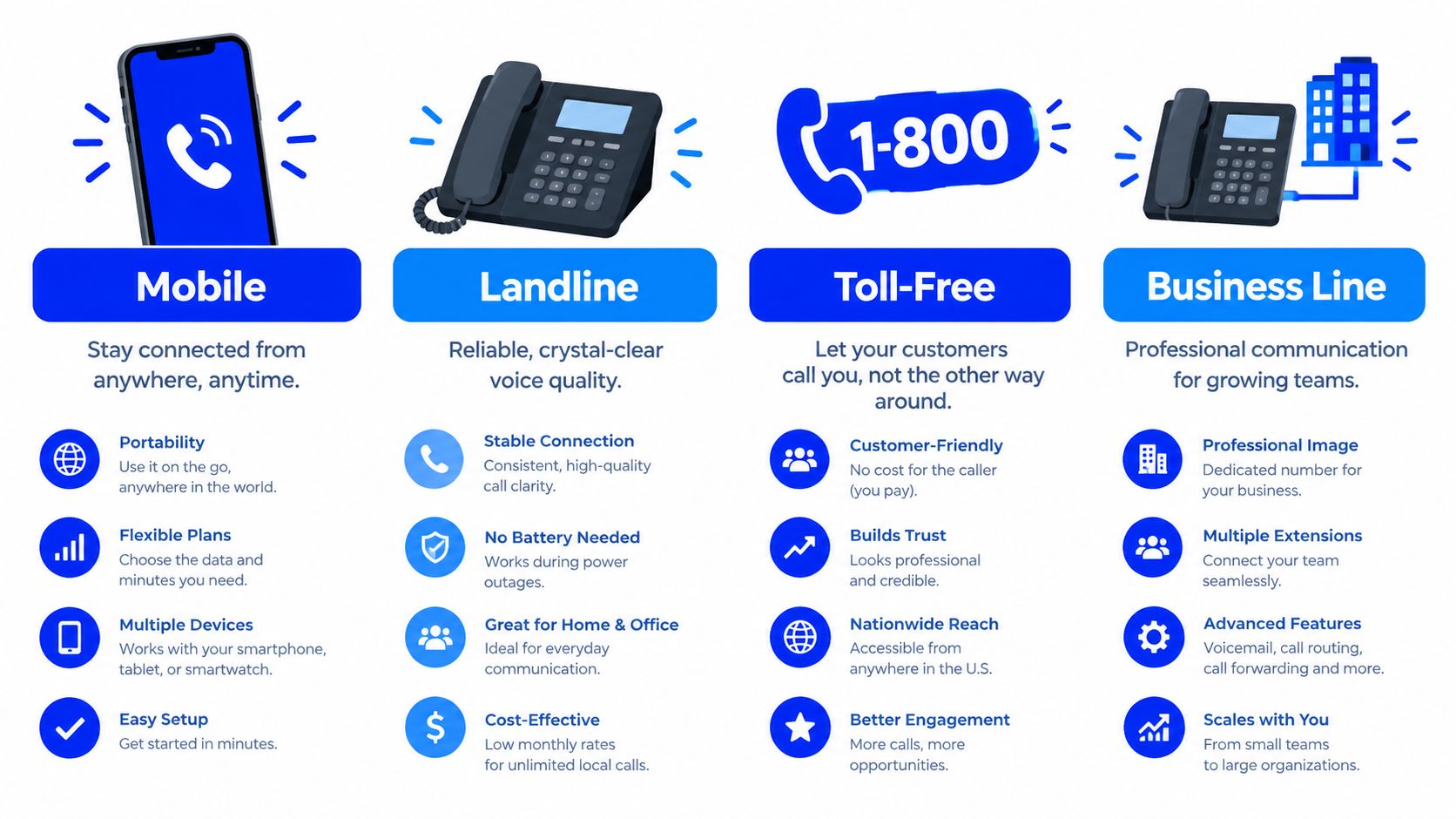
| Number type | Verification fit | Main concern |
|---|---|---|
| Mobile | Usually the most suitable category | The platform may still reject a range or virtual line |
| Landline | Limited | Standard SMS may not be available |
| Toll-free | Poor fit | Inbound calling and SMS behavior may not match OTP requirements |
| Business or shared-cost | Inconsistent | Routing and platform classification can vary |
A landline may work when a service offers voice verification, but it isn't a safe assumption for SMS. Toll-free, premium-rate, and shared-cost numbers should be treated cautiously because their purpose and routing differ from personal mobile services.
Practical rule: Choose the number type that matches the platform's verification channel, not the number that merely looks cheapest.
Readers comparing physical, virtual, and non-VoIP options can review LineVerifier's guide to a non-VoIP number. No Swiss number category guarantees acceptance by a third-party service, so the platform's own requirements still control the outcome.
Entering a +41 Number in a Verification Form
Most verification errors happen because the form has two separate fields, a country selector and a local number field, but the user treats them as one.
Choose Switzerland in the country selector. Search for “Switzerland” or select the Swiss flag. If the form already displays +41, don't type the country code again.
Enter the nine digits without the domestic zero. For 079 123 45 67, enter 791234567. The form should combine those digits with +41.
Use the full international number only when the form asks for it. If the field already shows a plus prefix and expects the complete number, enter +41791234567, without spaces, dashes, or parentheses.
Typing 0041 instead of +41 may fail on forms that accept only international plus notation. Leaving the domestic 0 in place can also produce the wrong digit string. WhatsApp registration is particularly strict about formatting and may reject spaces or a number entered with the domestic prefix.
Check the field before requesting another code. Correcting the prefix takes less time than diagnosing a delivery failure caused by a malformed number.
For a related account-specific example, the phone numbers for Gmail verification guide covers the distinction between entering a number and satisfying Google's own verification rules.
SMS Verification Versus Voice and New Account Versus Recovery
SMS verification and voice verification aren't interchangeable. A new account often presents an SMS field first, while recovery of an existing account may require a previously trusted number, device, email address, authenticator, or another recovery method.
That difference changes the decision. A mobile number that can receive SMS may suit a new registration, but it won't restore access to an account tied to a different old number. A new Swiss number doesn't recover an existing Gmail or banking profile whose recovery record still points elsewhere.
Google's account guidance says a recovery phone can be added, changed, or deleted in account security settings, and it specifically warns users not to use a Google Voice number as a recovery phone. The Google Account Help instructions also show why recovery settings must be handled separately from ordinary number ownership.
A platform may also ask for the original device, another trusted factor, or identity documentation. Those checks aren't solved by changing the phone format or ordering a different number.
For readers evaluating legitimate SMS-based workflows, the SMS verification services guide provides adjacent context. A temporary verification number should be treated as a short-term SMS channel, not as a permanent personal line or guaranteed recovery method.
Why Some Swiss Numbers Are Rejected by Platforms
A +41 prefix proves the country code, not the suitability of the number for verification. Platforms classify ranges and may reject numbers that appear to be landlines, VoIP services, toll-free lines, shared business numbers, or otherwise unsupported categories.
The official Swiss plan distinguishes geographical fixed-service codes, countrywide fixed-service codes, mobile ranges, and value-added services. That structure means two numbers that look similar at a glance can have very different routing and verification behavior.
A public directory also warns that a number may return no result just because it isn't listed, so a failed reverse lookup doesn't prove that the number is invalid or unreachable. The Swiss reverse phone lookup guidance recommends checking the entered number and adjusting the search when no match appears.
| Number type | Example range or prefix | SMS OTP | Bank verification | |
|---|---|---|---|---|
| Personal mobile | 075 to 079 | Depends on platform support | Depends on platform support | Depends on bank policy |
| Fixed network | Geographic fixed-service range | Often unsuitable for standard SMS | Platform-dependent | Often restricted |
| Toll-free | 0800 range | Don't assume support | Usually unsuitable | Usually restricted |
| Premium-rate | 0900 range | Not an ordinary OTP line | Unsuitable | Restricted |
| Shared-cost or business | 084x or other business ranges | Inconsistent | Platform-dependent | Often subject to extra screening |
A valid Swiss number can still fail because the service doesn't support that number type, the carrier routes messages differently, or the account triggers a separate fraud or identity review. No formatting trick can override those rules.
Troubleshooting Missing Codes and Delivery Failures
When a Swiss code doesn't arrive, the first check is the entry format. If the form expects the international number, +41791234567 is structurally different from 0791234567. The latter is a domestic form and may fail when pasted into an international field.
Next, check the number category. A landline, toll-free service, shared-cost range, or virtual number may be reachable for some purposes but not support the SMS route selected by the platform. A directory lookup also can't confirm that a number accepts OTP messages, because listing, reachability, and SMS acceptance are separate questions.
Use this order:
- Verify the selector: Switzerland should be selected once, with no duplicated +41.
- Inspect the local digits: The domestic leading 0 should be removed after +41.
- Confirm the channel: Check whether the platform sent SMS, voice, or an in-app prompt.
- Check the number type: Don't treat a fixed, toll-free, or business line as a mobile.
- Review platform support: Some services restrict virtual, shared, or otherwise unsupported ranges.
- Avoid repeated retries: Further requests can trigger platform-side limits or make diagnosis harder.
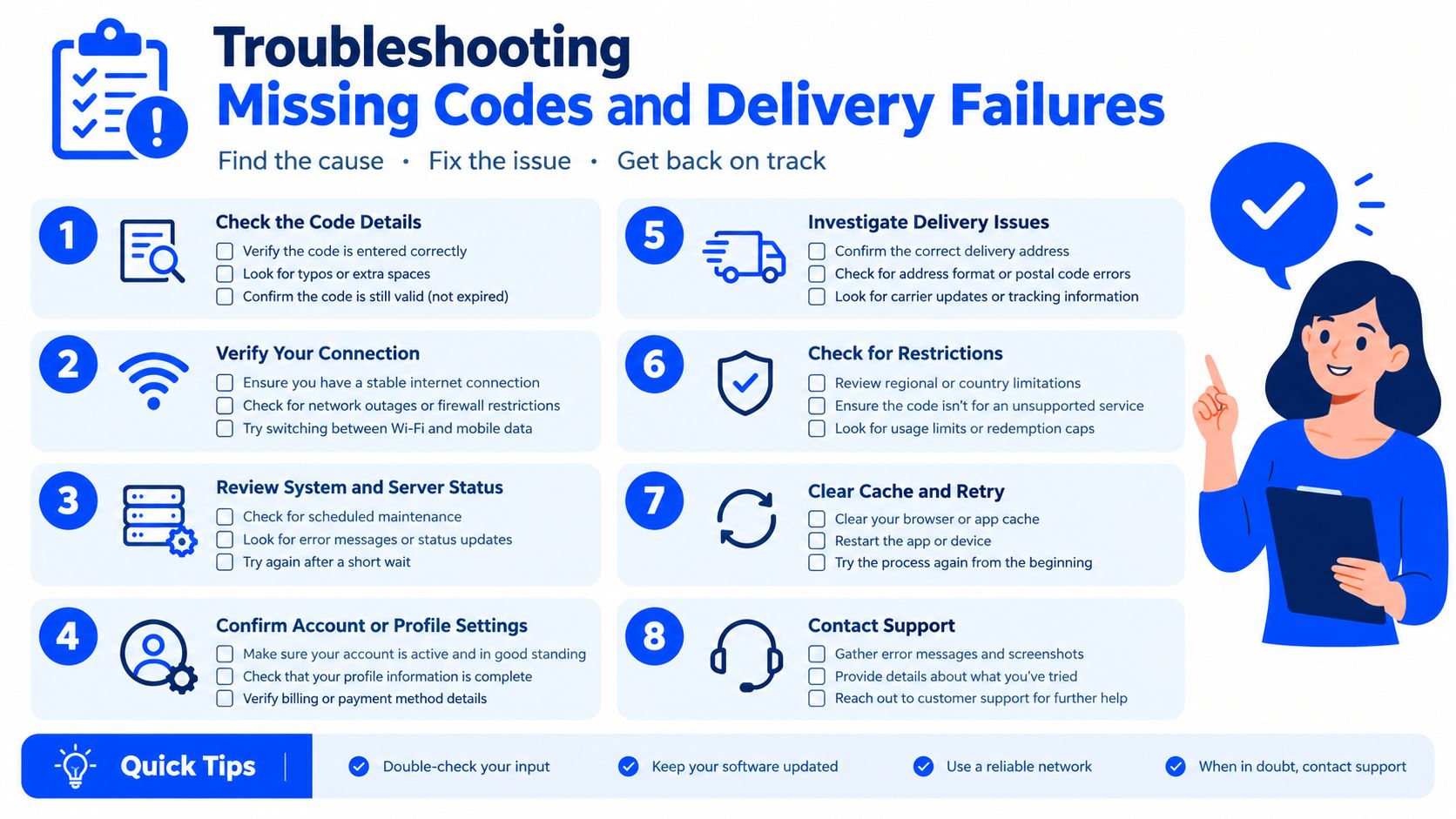
If the number is correctly formatted and the platform supports its category, the remaining issue may sit with the carrier, sender, or account security system. A voice fallback can help only when the service offers it and the chosen number can receive calls. It won't turn an unsupported SMS number into a supported one.
Building a Reliable Long-Term Swiss Number Setup
A Swiss phone number used for account access should be treated as infrastructure, not a disposable formatting exercise. The strongest setup starts with a number category that matches the account's actual verification method, followed by recovery options the account owner controls directly.
Keep the original SIM or eSIM credentials separate from the verification account. Store recovery codes securely, maintain a stable email address, and use a hardware security key where the platform supports one. Those safeguards matter because changing the number doesn't transfer the old recovery relationship to the replacement line.
Avoid unnecessary number changes. A new line can leave old SMS history, recovery settings, and two-factor associations behind, while a temporary verification number may not provide ongoing access after the selected offer ends.
Reliable setup means redundancy. The Swiss mobile number can handle a supported SMS check, but it shouldn't be the only route back into an important account.
LineVerifier offers country selection for supported SMS verification orders, with the available number type, price, access duration, and refund eligibility shown for the selected offer. It doesn't guarantee third-party acceptance, continued account access, voice calling, or permanent ownership.
For a supported SMS verification workflow, review the current country and offer details before ordering, then enter the Swiss number with +41 and without the domestic 0. Visit LineVerifier to check the available options and choose a number only when its stated capabilities match the platform's requirements.