.png&w=384&q=75)
SMS Verification Services Explained: How They Actually Work
The code still hasn't arrived. The user presses resend, checks the phone number, waits, and eventually wonders whether the problem is the phone, the platform, or the verification provider. Developers face the same uncertainty from the other side, except each failed attempt can become a support ticket, an abandoned signup, or a fraud signal.
SMS verification services solve different problems depending on the product. Some send outbound one-time passwords through an API that an application controls. Others supply a phone number that receives an SMS on behalf of a customer. Confusing those two categories leads to the wrong purchase, the wrong expectations, and poor troubleshooting.
What SMS Verification Services Actually Are
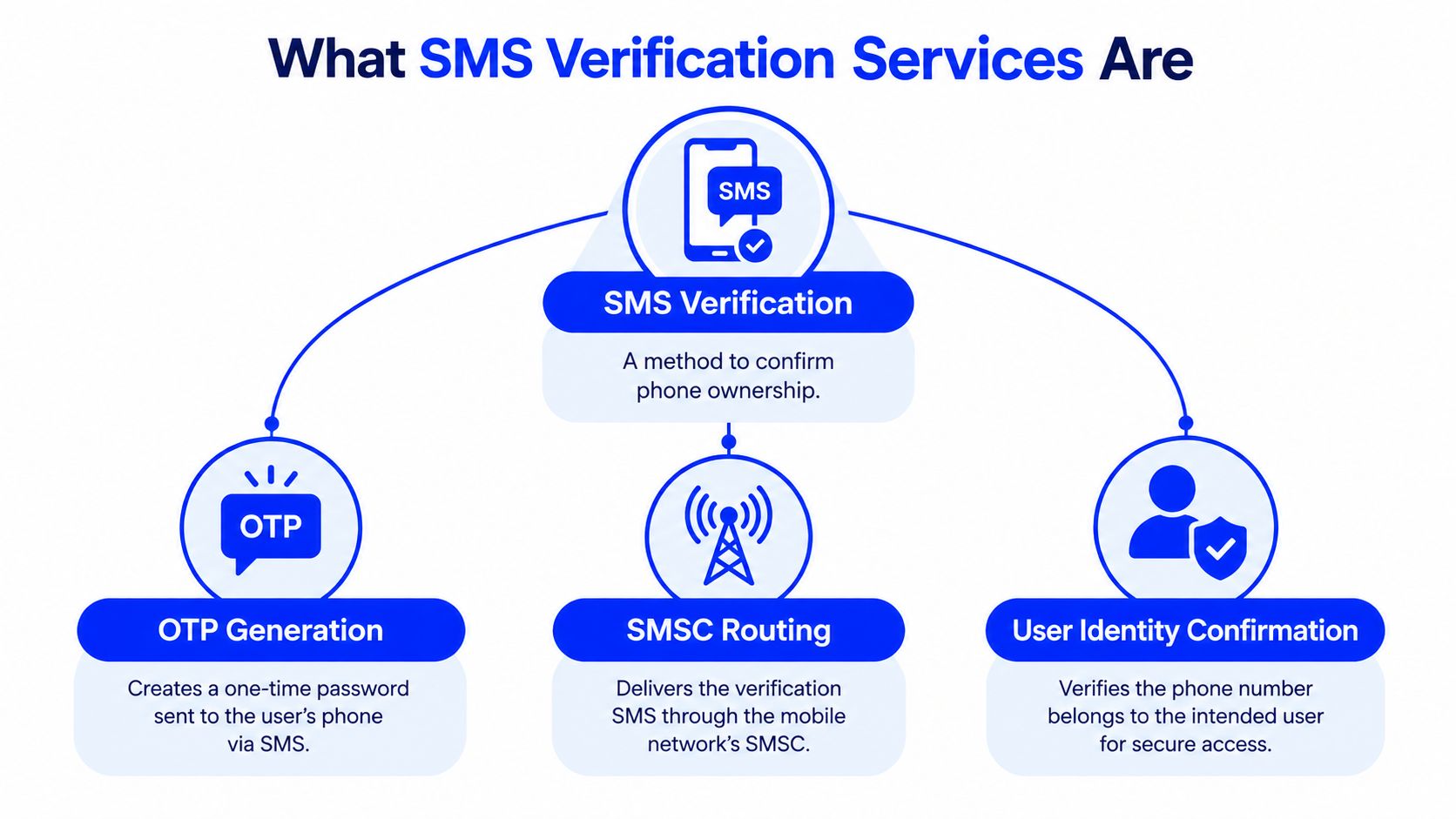
An SMS verification service confirms that someone can receive a one-time code at a phone number. A platform generates the code, sends it through the mobile network, and asks the user to enter it back into the application. The service isn't a general-purpose messaging tool, and receiving a code doesn't automatically prove a person's full identity or permanent ownership of an account.
SMS remains widely available because more than 8.5 billion mobile subscribers worldwide can receive SMS messages, according to industry guidance on secure SMS verification systems. That reach makes text messaging practical for global audiences, even though app-based authentication can be faster in the same source's comparison.
Two service models are commonly grouped under the same label:
- Outbound verification APIs: These are built for developers. An application requests a challenge, an API sends the SMS, and the application later submits the entered code for validation. Typical use cases include signup, login, password changes, checkout protection, and fraud controls.
- SMS-receiving number services: These provide a number for a user who needs to receive a verification message from a third-party platform. The customer selects a supported service and country, obtains access to an available number, and reads the incoming code through a dashboard or compatible interface.
The distinction matters because the buyer's job differs. An app developer needs delivery controls, callbacks or polling, secure verification sessions, logging, and abuse prevention. An individual needs a supported number offer and a way to view the received SMS. A receiving service doesn't give the developer an outbound verification infrastructure, while an outbound API doesn't necessarily provide a separate number for registering on another platform.
The terminology also benefits from a basic distinction between checking whether a claim is supported and confirming that a process or input meets a requirement. DevArmor's explanation of the difference between verification and validation provides useful context. In practical terms, SMS can support a platform's verification step, but the platform still decides what that step means.
How SMS Verification Flows Work End to End
A user can request a code, wait, request another, and still receive the first message after entering the second. That failure usually involves the delivery path, not just token generation. A reliable flow coordinates the application, verification backend, outbound SMS API, carriers, and the final validation step.
The five stages behind a code
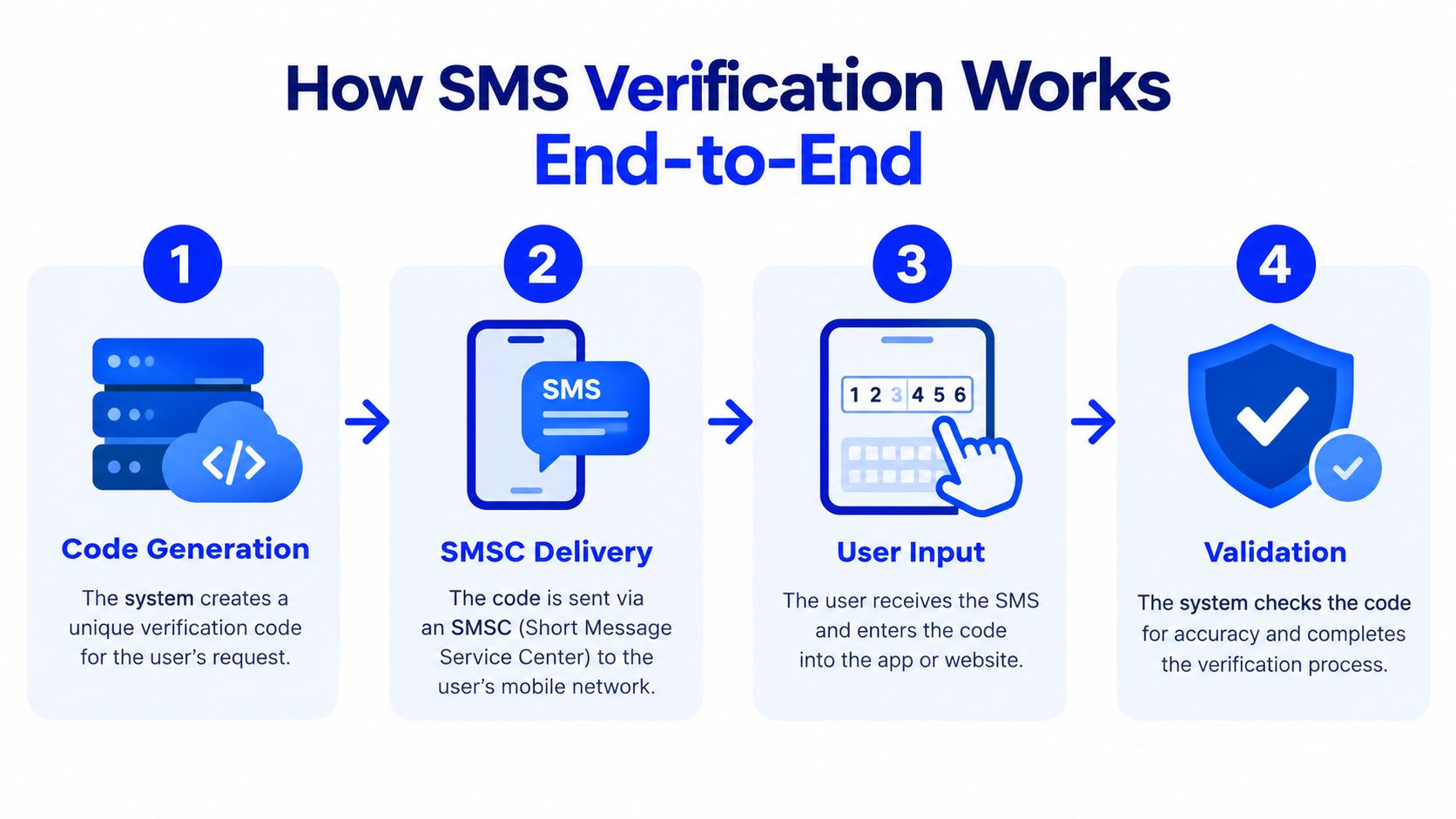
- Token generation: The backend creates a short-lived code for one action, such as signup or login. It should be unpredictable and must not appear in application logs.
- Secure storage: The system stores the token securely, ties it to the phone number and verification session, and records relevant risk context. Successful use should invalidate it immediately.
- Provider and carrier delivery: An outbound SMS API sends the message through provider and carrier routes. Filtering, network conditions, sender registration, and local routing rules can affect delivery. Services that supply numbers for receiving SMS are a separate category and do not control this outbound path.
- User input: The user enters the code shown on the device. A resend policy should limit repeated requests, prevent several active tokens, and avoid confusing delayed messages.
- Backend validation: The server checks the code, session, action, expiration state, and risk context before completing the requested action.
The code is only one input to the decision. If the backend accepts a valid token without checking its session, a code created for another action could approve the wrong request. If older tokens remain active, delayed delivery can create replay opportunities.
Practical rule: Bind each code to one verification session and one action, expire it quickly, and invalidate it after successful use.
Delivery timing depends on route, carrier policy, and country. Technical guidance describes typical OTP delivery windows of about 2 to 15 seconds and recommends a minimum resend interval of about 60 seconds. A published benchmark reports direct-carrier routing at 95–99%, compared with 80–90% for aggregator-routed OTP flows. These figures are guidance from technical notes on missing OTP messages, not a promise for every destination or provider. Treat them as planning references, then test the routes and carriers your users use.
SMS confirms that a message reached a device able to receive it. It does not establish durable identity, prove that the intended account owner is present, or remove SIM-swap and interception risks. The application still has to make that wider security decision.
Privacy, Security, and Compliance Considerations
A secondary number can separate a user's personal phone number from a registration or testing workflow. That separation may reduce unnecessary exposure, but it creates a different dependency. The account may rely on access that is temporary, shared, controlled by a third party, or unavailable during a future recovery attempt.
The most important boundary is between new-account verification and account recovery. Obtaining another SMS-capable number doesn't recover an existing account tied to its previous number. Recovery is controlled by the platform's own identity and risk rules, not by the provider that supplies a number.
Google says account recovery must begin through its official recovery flow and that users can't manually force an SMS option when Google doesn't offer it. For Google Workspace, an administrator has a defined route through the user record, Security, and 2-step verification to generate backup verification codes, as described in Google Workspace's account recovery guidance. Microsoft similarly directs users to its Account Recovery form for manual review when standard recovery fails, and repeated rejection can mean the system considers the account unrecoverable, according to Microsoft's recovery guidance.
Data handling should match the risk
A production service should limit who can view codes, protect them in transit and at rest, and retain only the audit information needed for security and support. Teams should also define how long verification events, phone numbers, failed attempts, and provider responses remain available.
A temporary number introduces specific operational risks:
- Recovery dependency: If the number is no longer accessible, the user may lose a recovery channel.
- Reassignment risk: A number can later be allocated to another subscriber, depending on the carrier or offer.
- Third-party exposure: The receiving service may handle the message and associated account metadata.
- Platform restrictions: A third-party platform can reject a number type, restrict an account, or require additional identity checks.
Readers who need a plain-language explanation of suspicious code requests can consult the Gini Help guide to verification-code text message scams. For practical guidance on receiving a code without confusing that step with recovery, the LineVerifier guide to SMS verification codes is also relevant.
The defensible approach is simple: use official recovery options first, disclose the number's intended purpose, avoid sharing codes, and maintain at least one recovery method the account owner controls.
SMS Verification versus Other Authentication Methods
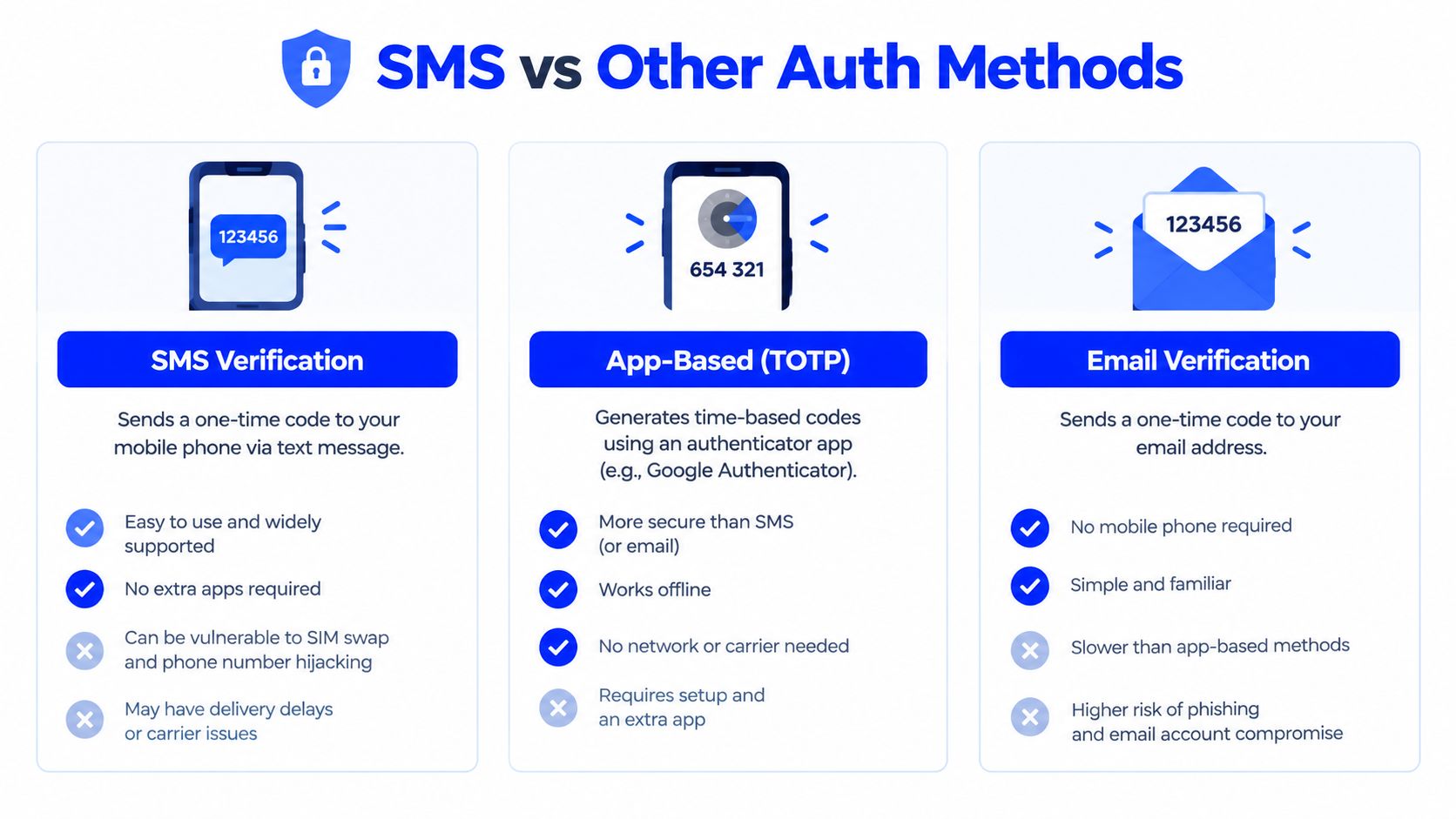
SMS is convenient because most users understand it and don't need to install another application. It also works across a broad range of devices and regions. The trade-off is that a phone number can be exposed to SIM swaps, carrier changes, interception, filtering, and loss of access.
| Method | Where it fits | Main limitation |
|---|---|---|
| SMS verification | Broad reach, simple onboarding, account confirmation | Depends on carrier delivery and phone-number security |
| App-based authentication | Regular login and stronger protection than SMS | Requires an enrolled device or authenticator app |
| Email verification | Signup confirmation and low-friction account actions | Depends on email-account security and inbox access |
| Voice verification | Users who can't receive SMS but can answer calls | Voice availability and platform support vary |
| Hardware security keys | High-value accounts and security-sensitive teams | Requires compatible hardware and enrollment |
App-based authentication is often a better fit when the account has meaningful financial, administrative, or business consequences. Hardware keys provide a stronger control for organizations that can manage enrollment and replacement. Email works for some low-risk confirmations, but it shouldn't be treated as independent from an already compromised email account.
SMS still has a role for broad consumer access and initial number confirmation. It shouldn't be the only control for a sensitive account, and a number supplied for a one-time registration shouldn't be mistaken for a long-term phone line.
Fraud screening can complement authentication by examining account and contact signals before a challenge is sent. Portreeve's material on fraud screening for SaaS offers a relevant example of that broader risk-screening layer, although screening doesn't replace the platform's own authentication decision.
How to Choose a Reliable SMS Verification Provider
Start by identifying the actual job. A developer integrating authentication into a product should compare outbound APIs, documentation, session management, delivery callbacks, error handling, abuse controls, and data-processing terms. A person who needs to receive a code should compare available service and country combinations, number type, access duration, price, and refund eligibility.
A useful buyer review asks the following questions:
- What is being supplied? Is the offer an outbound verification API, a dedicated line, a temporary receiving number, or something else?
- Which country and service are supported? Availability is offer-specific. A number that works for one platform may not be accepted by another.
- What number type is involved? Mobile, landline, VoIP, shared, and temporary numbers can receive different treatment from third-party platforms.
- What happens when delivery fails? Review the current terms for replacement or refund eligibility instead of relying on historical marketing claims.
- How long does access last? Temporary access isn't the same as permanent ownership or a personal phone line.
- How are codes exposed? The dashboard or API should make it clear who can view messages and how access is authenticated.
- Can the provider explain failures? Useful status information is more valuable than an unsupported success promise.
LineVerifier is one option in the receiving-number category. Customers choose a supported service and country, review the current offer and price, and use the dashboard to receive SMS verification codes. Availability, number type, access duration, and any refund eligibility depend on the selected offer and the terms shown at the time of purchase.
For background on the underlying terminology, the guide to virtual phone numbers helps separate a temporary verification number from a long-term phone line. The distinction affects privacy, recovery planning, and whether the number is suitable for repeated account access.
No provider can guarantee acceptance by a third-party platform. Platforms can reject unsupported number types, impose additional checks, or restrict an account independently of the SMS service.
Integration Steps and Troubleshooting Common Issues
A broken verification flow often starts with a simple mismatch: the application expects an outbound verification API, while the user is trying to receive a platform-generated SMS on a supplied number. These models need different integration logic. For outbound verification, the application controls the challenge request and validation sequence.
- The application creates a verification session for a phone number and account action.
- The backend asks the provider to send an SMS challenge.
- The user enters the code received on the phone.
- The backend submits the code with the session identifier.
- The application records success, failure, expiration, or a limited retry.
“Message requested” does not mean “user verified.” The backend should inspect the provider response, enforce resend and attempt limits, and bind the result to the action that created the session.
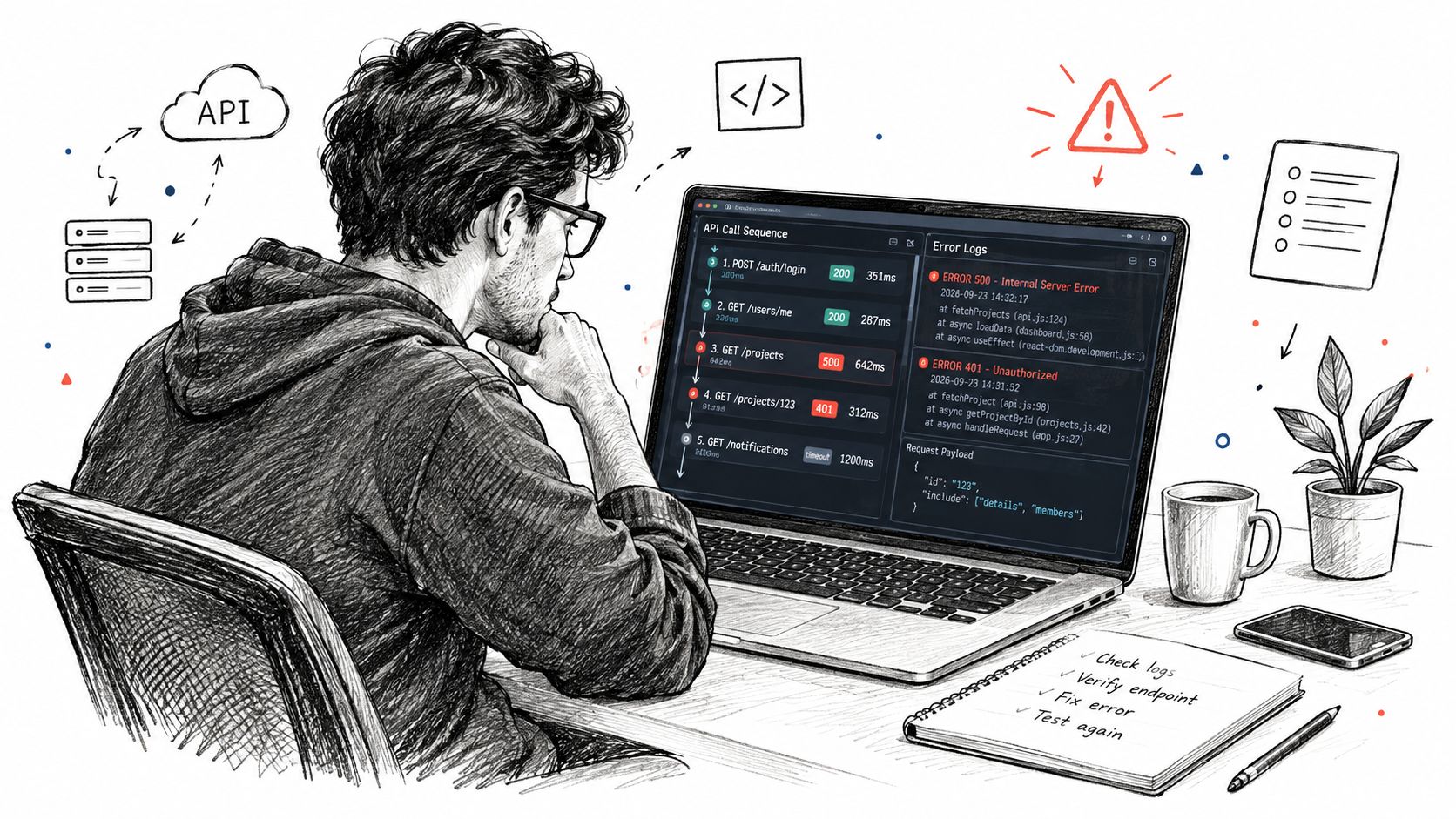
Diagnose the failure in the right order
Start with the number format, country selection, SIM activity, and network coverage. Delivery can also fail because of blocked message settings, carrier filtering, or missing application-to-person registration. The primary bottleneck is often message routing and carrier acceptance, not the code that handles the API response.
Then inspect application state:
- A previous code arrived late: The newest request may have invalidated it. Show which session remains active.
- Repeated resends stopped working: A rate limit may be active. Wait before creating competing requests.
- Other SMS messages arrive normally: Carrier filtering or platform routing may affect this sender specifically.
- No messages arrive at all: Check coverage, airplane mode, blocked senders, SIM activity, and formatting.
- The platform offers no SMS recovery option: Use its official recovery workflow instead of treating the issue as ordinary delivery failure.
Supercell's account-protection guidance recommends checking network stability, toggling airplane mode, testing SMS from other senders, and waiting a couple of hours after too many requests, according to Supercell's official help page. It also explains that SMS codes can help prove account ownership instead of Recovery Codes and that one phone number can serve multiple Supercell ID accounts.
For teams, administrative recovery may remain available even when an individual user cannot select SMS. Google Workspace administrators can generate backup verification codes through the documented user-security workflow. For guidance on the receiving workflow, see how to receive SMS verification code before troubleshooting delivery.
The receiving-number model follows a different pattern. LineVerifier's API documentation describes registration, credit management, number ordering, and polling for received verification codes over HTTPS with JSON. That can support an authorized workflow requiring programmatic access to incoming messages, but it cannot control whether a third-party platform accepts the number or permits recovery.
The following video provides a visual overview of the general verification concept:
Practical Buyer Checklist and Final Recommendations
Before choosing among sms verification services, a buyer should answer five questions:
- Is the need outbound or inbound? Developers need an API to send and validate challenges. Users may need a number that receives a platform's SMS.
- Does the selected offer support the target service and country? Availability is not universal.
- Is the number temporary or long-term? Plan recovery accordingly.
- What happens after failure or expiration? Read current replacement and refund terms.
- What official recovery method remains available? Keep it independent of the temporary number.
SMS confirms message access, not guaranteed account ownership or platform acceptance. Use it for an appropriate risk level, protect codes, respect platform requirements, and choose app-based authentication or security keys when the account demands stronger protection.
LineVerifier lets customers select a supported service and country, review the current offer, and receive verification SMS through its dashboard, with availability and terms shown for the chosen offer. Visit LineVerifier to review the available receiving-number options before starting a legitimate verification workflow.